Mokokchung| 15 April:
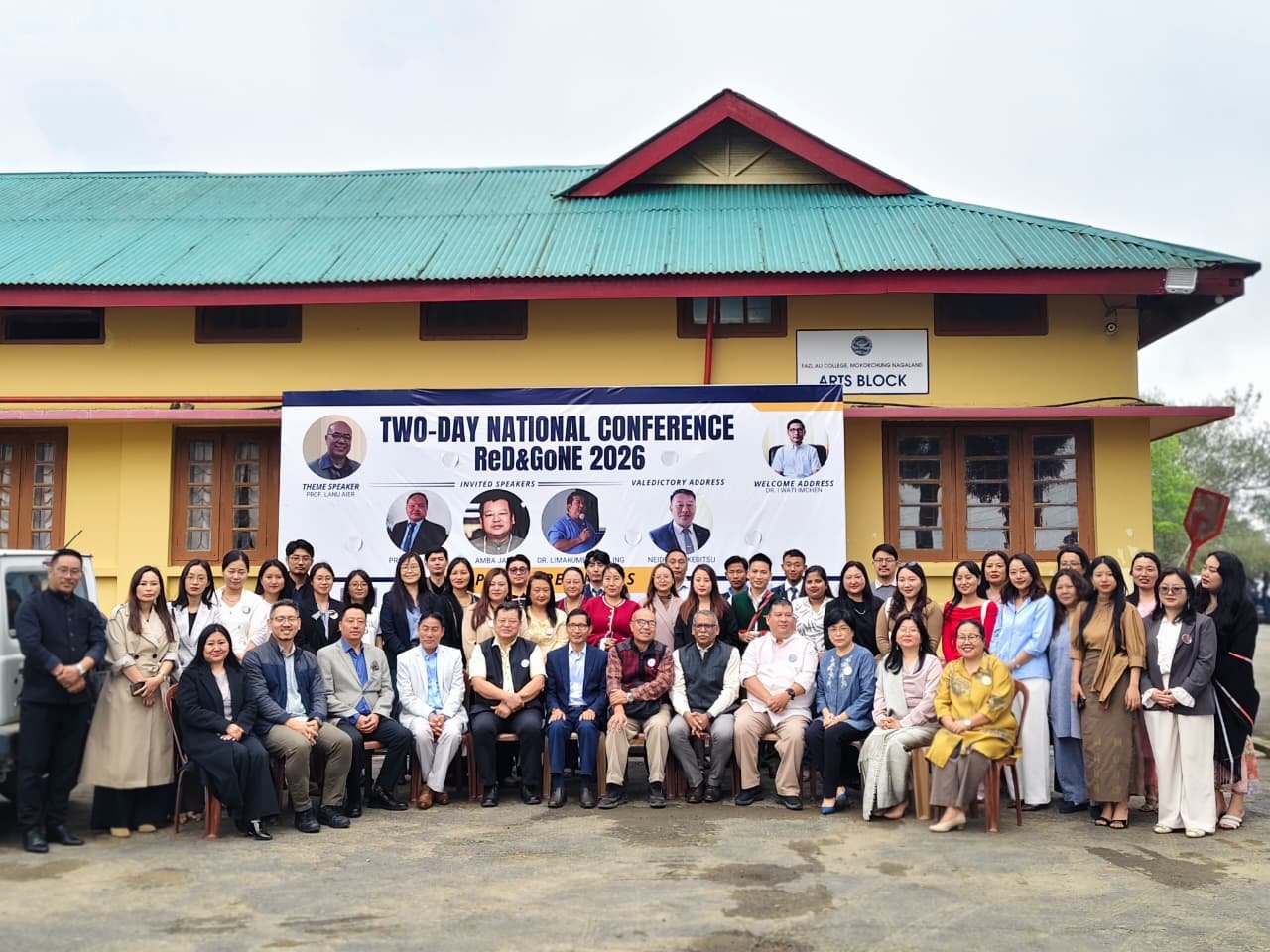
A two-day National Conference on “Reimagining Development and Governance in North-East India: Pathways for Inclusive and Sustainable Futures (ReD&GoNE 2026)” organized by the Departments of Economics, Political Science and Sociology, FAC and sponsored by IQAC, FAC began on April 15, 2026, at Fazl Ali College (FAC), Mokokchung with Prof. Lanu Aier, Retired Professor of Sociology, NEHU as the theme speaker.
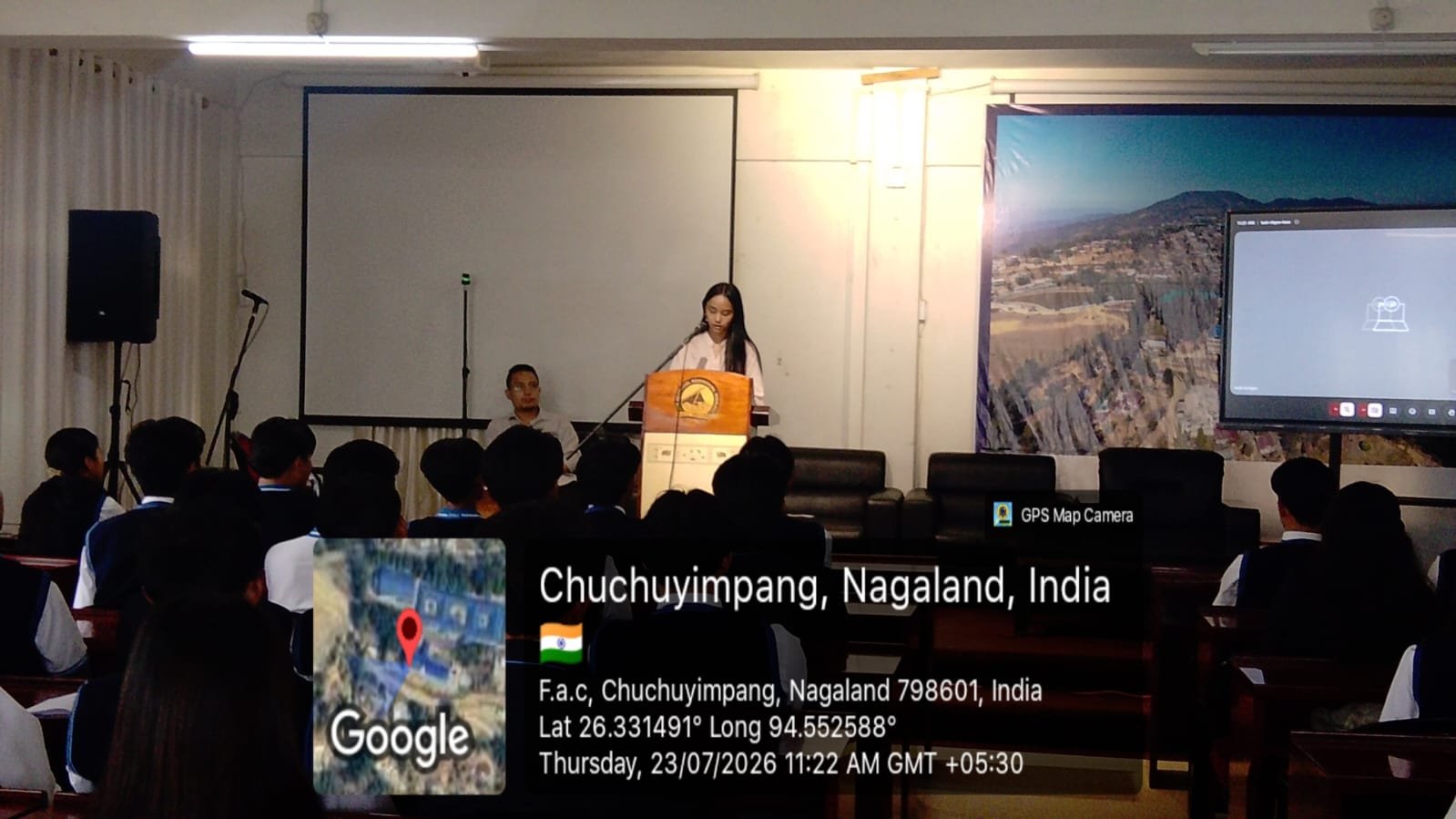
The inaugural sessionwas chaired by Dr. Adangla Changkija, Associate Professor and Head of the Sociology Department, FAC, who also serves as the Programme Convenor of the conference. In her opening remarks, she highlighted Northeast India as a region rich in cultural heritage, resilience, and immense potential. She emphasized that the conference aims to foster dialogue centered on people-oriented pathways and future-focused development.
Delivering the welcome address, Dr. I. Wati Imchen, Principal, FAC and Patron of the conference, emphasized the importance of collaboration in addressing contemporary challenges. He spoke on globalization and multiculturalism, stressing the need to revisit history, language, and traditions in the Northeast within an inclusive framework. He noted that the conference provides a vital platform for academicians and researchers to contribute towards building a sustainable future.
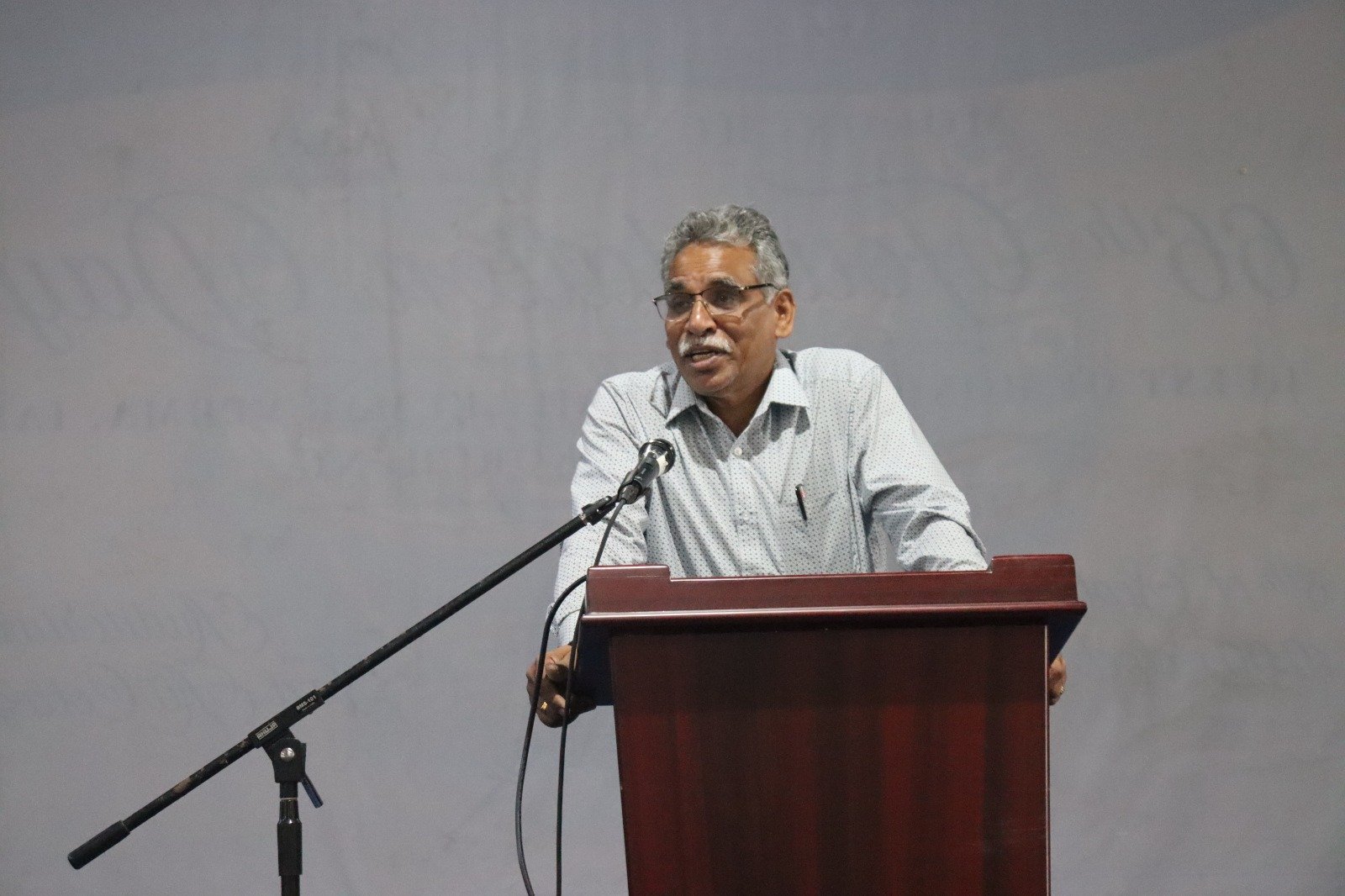
Theme speaker, Prof. Lanu Aier, offered an insightful and critical exploration of the concept of development. Defining development as “any change by action,” he emphasized that development is inherently tied to human agency and must be examined through ethical and moral lenses.
Drawing from the context of Nagaland, Prof. Lanu Aier highlighted the dual nature of development, noting that it can lead to both progress and regression depending on qualitative outcomes. He elaborated on various dimensions of development including social, economic, political, and religious, arguing that social development is a culmination of all these aspects.
Raising critical questions, he asked whether Nagas can truly be considered developed, and who bears responsibility for development in the region. He pointed to the roles of political parties, pressure groups, and civil bodies, observing contradictions in their functioning, particularly in comparison to practices in other parts of the world.
Prof. Aier also drew attention to the region’s economic dependence on central funding, questioning the sustainability of such a model. He challenged prevailing notions of identity, morality, and tradition, urging introspection on whether these values are genuinely practiced.
He concluded by stressing the need for continued dialogue and critical engagement, noting that such conferences provide important spaces to explore diverse and meaningful solutions for the future.
The inaugural session concluded with a summation and acknowledgement by Bendangsenla, Coordinator, IQAC, Fazl Ali College, and Co-Patron of the conference. She reflected on the key themes of the keynote address and expressed hope that the conference would move beyond critique towards constructive and actionable outcomes.
In the first technical session, invited speaker, Amba Jamir, Independent Policy Analyst & Development Strategist, Guwahati, Assam spoke on “From Frontier to Pivot: Reimagining Development and Governance in Peripheral Landscapes.”
In his address, Amba Jamir emphasized the need to rethink development in North-East India by shifting from externally imposed models to approaches rooted in local realities, indigenous knowledge, and institutional contexts.
He highlighted structural challenges such as dependence on central frameworks, gaps in governance systems, and the limited operational capacity of existing institutions. Stressing the importance of integrating traditional and modern systems, he called for a more context-sensitive, participatory, and sustainable vision of development that emerges from within the region itself.
The conference brings together scholars, researchers, and academicians from across the region and beyond, and will conclude on 16 April with multiple technical sessions and discussions.